





ISP Consumer Panel in their own words: December 2025
The 2026 ISP Consumer Panel members (Mark Henley – Chair, Jarra Hicks, Beverley Hughson and Craig Memery) share an update on their recent contributions to the two-year development of the 2026 ISP.
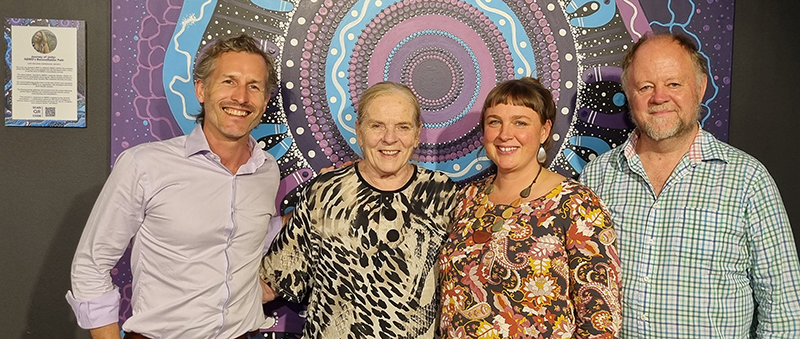
2026 ISP Consumer Panel members Craig Memery, Beverley Hughson, Jarra Hicks and Mark Henley.
Over the last couple of months, the ISP Consumer Panel has sent to AEMO the first of two reports that we are required to prepare, as set out in the National Electricity Rules. This report being our response to the Final Inputs, Assumption and Scenarios Report (IASR) which generates the data that drives analysis to produce the Optimal Development Path for Australia’s energy markets, which becomes the ISP.
The Panel has also made submissions to the AEMC in response to two ISP-related rule change proposals from the Centre of Independent Studies (ERC0406) and Energy Consumers Australia (ERC0410) respectively and initiated discussion regarding the AEMC ISP review (due June 2027). A brief submission has been prepared for AEMO regarding the Demand Side Factors Information Guidelines while we’ve had focused discussions with AEMO about how to present aggregate ISP cost data, focus for the Demand Side Factors Statement and social licence perspectives for the Draft 2026 ISP.
Amid this flurry of activity and ahead of the release of the Draft 2026 ISP, the Panel has paused briefly for some reflections which we present at the end of this article.
Key Topics
The Demand Side Factors (DSF) Statement is now required as part of the ISP as a result of a rule change made by AEMC on 19 December 2024, initiated by Minister Chris Bowen. The DSF has been released with the Draft 2026 ISP on 10 December 2025 as an appendix. The Panel considers this statement to be a significant and constructive enhancement to the ISP process and will be giving it significant attention in our response to the Draft 2026 ISP. We are acutely aware that AEMO staff have put substantial effort into producing this statement which, we suspect, will attract international energy markets’ attention – we are not aware of anything quite like it elsewhere. We awaited its release with eager expectation and hope that consumer groups will have an opportunity to respond to it. The Panel also anticipates that the DSF will evolve in data strength and focus over the next couple of ISP cycles.
The Centre for Independent Studies (CIS) rule change raises some important questions about how policies by various governments are taken into account in developing the ISP. The Panel opined that a new rule was not appropriate at the moment and that the issues raised and the rule change proposal itself were best considered as part of the AEMC ISP review, that will likely release an issues / discussion paper in the week before Christmas 2025.
The Integrated Distribution System Plan (IDSP) proposal from Energy Consumers Australia is focused on amending the way that planning is undertaken for distribution networks. In response, the Panel asked about the relationship between the IDSP and other distribution and energy planning processes, including the ISP’s Demand Side Factors statement, which will be new for the 2026 ISP, the newly announced DSOO (Demand Side Statement Of Opportunities), the ISP itself and jurisdictional network planning processes. We also asked about costs associated with implementing the proposal.
Reflections
These reflections are, in part, included in our response to the 2025 Inputs, Assumptions and Scenarios Report and also include some more recent thinking. They are not ordered in any priority and are given as debate initiators rather than conclusions.
The ISP is evolving. We suggest that the 2026 ISP may well be something of an inflection point in ISP development with the focus on major transmission projects diminishing while focus increases on firming / storge / shaping of energy markets (we also note that this language is still emerging too), and that this includes demand side considerations of which CER is an important component. There are important narratives to be presented to the Australian public that factually explain this observation.
We have a strong sense that ‘everyone’ wants to get their agenda / pet project incorporated into and legitimised through the ISP. This, in turn, is adding more detail and complexity to the ISP process. In our response to the final IASR, we compared process diagrams for the 2024 and 2026 ISPs; there is a significant increase in complexity and detail. We are concerned that this can and probably is already leading to engagement fatigue for consumer advocates, a crucial voice for the ISP.
We also observe that the ISP development process is very technical with outstanding modelling. The risk here is that the process is rendered ever more technical. This needs to be balanced by working harder to keep humanity in energy systems too. The greater the abstraction of the energy system, and the potential distancing from reality, means the ISP development process risks losing the all-important consumer focus and associated social licence.
The Panel would really like to hear responses to these observations and any implications or any other comment on the 2026 ISP including the Demand Side Factors statement.
Please email us at [email protected]
Contact the 2026 ISP Consumer Panel
The Panel is continually exploring approaches that will enhance input to any aspect of the ISP by consumer interests and can be contacted with any suggestions via [email protected]